
Education, not marketing
Understanding gynecomastia
A plain-language guide to what gynecomastia is, how common it actually is, and the range of ways men manage it, from doing nothing, to compression garments, to surgery. Every figure below is sourced; none of it is a substitute for talking to a doctor.
What it is
Enlarged breast tissue in men, and it's more common than most people think.
Gynecomastia is the enlargement of breast tissue in boys or men, caused by an imbalance between the hormones estrogen and testosterone. It can affect one or both sides of the chest, sometimes unevenly, and can occur at any age, though it's most frequent during infancy, puberty, and older adulthood, when hormone levels naturally shift (Mayo Clinic).
It's important to distinguish true gynecomastia, actual glandular breast tissue growth, from pseudogynecomastia, which is excess fatty tissue in the chest without glandular enlargement, often related to body weight rather than hormones (Aesthetic Surgery Center). Many men have some combination of both, and only a physician can reliably tell the difference through a physical exam or imaging.
What causes it
A hormone imbalance, usually, but with many possible triggers.
Gynecomastia results from a relative excess of estrogen compared to testosterone in breast tissue. According to Mayo Clinic, common contributors include:
- Natural hormone changes.Newborns, boys during puberty, and older men all experience shifts in estrogen-to-testosterone ratios that can trigger temporary or lasting tissue growth.
- Medications.Certain anti-androgens, anabolic steroids, some antidepressants, anti-anxiety medications, antibiotics, ulcer medications, and heart medications have been linked to gynecomastia.
- Health conditions.Hypogonadism, hyperthyroidism, kidney failure, liver failure, and some tumors can all disrupt the hormone balance that affects breast tissue.
- Substance use.Alcohol, marijuana, and certain other recreational drugs are associated with an increased likelihood of gynecomastia.
How it's managed
There's a range of paths, not just one.
Watchful waiting
For adolescents, gynecomastia frequently resolves on its own as hormone levels stabilize, so physicians often recommend monitoring before considering any treatment. Many cases in older men also remain stable and simply get managed rather than treated (PMC clinical review).
Medication or addressing the cause
When gynecomastia is linked to a specific medication, health condition, or hormone imbalance, addressing that underlying cause, or in some cases using medications such as tamoxifen, may reduce tissue growth, particularly if caught early (PMC clinical review; EAA Clinical Practice Guidelines).
Surgery
For persistent, well-established, or bothersome gynecomastia, surgical removal of glandular tissue (with or without liposuction) is a common and effective option. Good candidates are generally physically healthy, at a stable weight, non-smokers, and have realistic expectations (American Society of Plastic Surgeons).
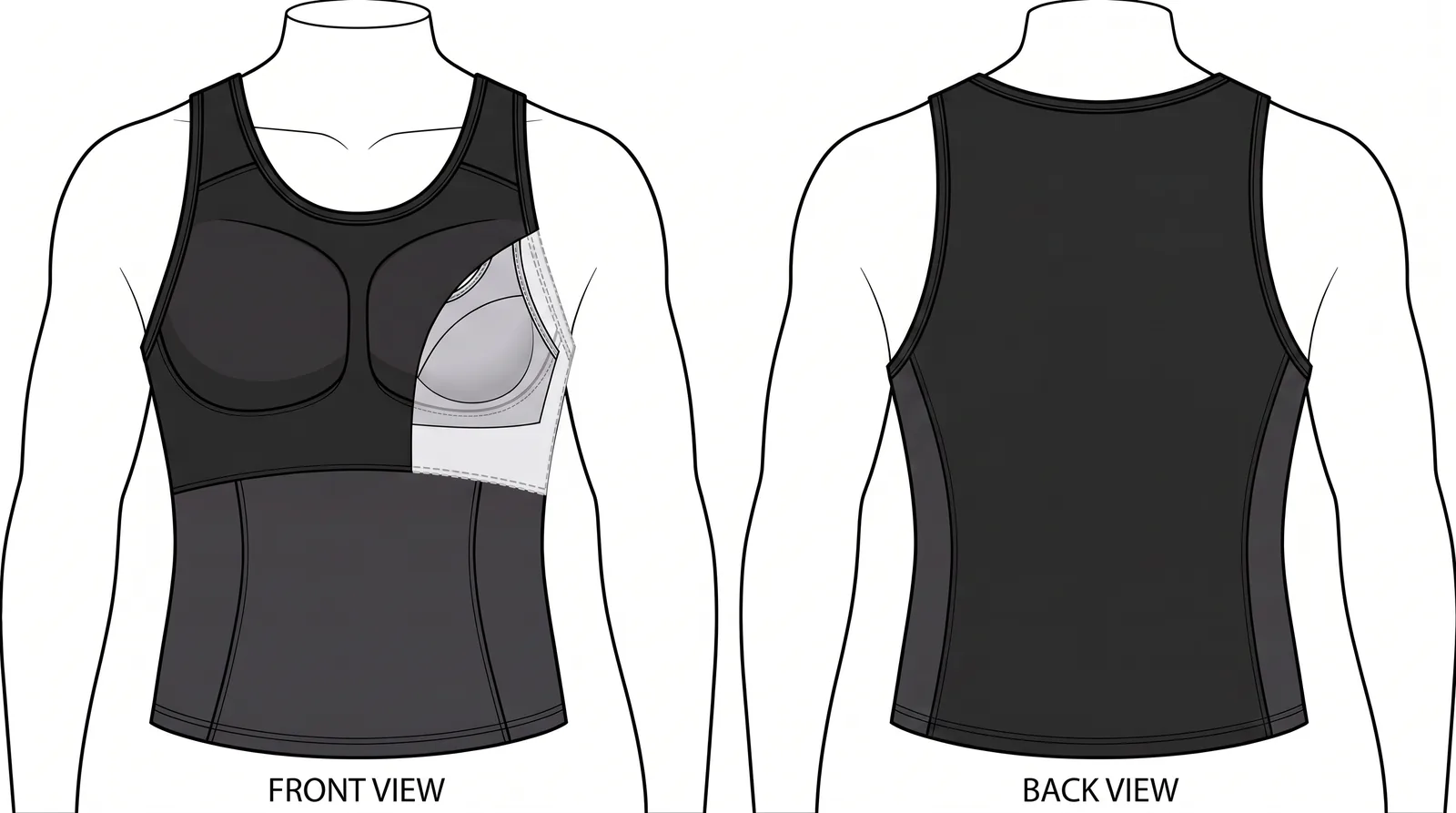
Compression garments, including Quietfit's ContourFit line, are a shaping and comfort option that can sit alongside any of these paths. They are not medical treatment and don't replace a conversation with a physician.
Where compression garments fit in
Before surgery, after surgery, or instead of surgery.
Before surgery: men who are still deciding whether to pursue a procedure, or who are not currently candidates, often use compression garments day-to-day to manage how their chest looks and feels under clothing.
After surgery: surgeons commonly prescribe a compression vest to be worn continuously for roughly the first two weeks after gynecomastia surgery, then during waking hours for an additional two to four weeks, to help control swelling, support healing skin, and improve final contour (Charlotte Gynecomastia, Gynecomastia.org, Gynecomastia LA, Austin Gynecomastia Center).
Instead of surgery: many men manage gynecomastia, or simply want a sharper chest line, without ever pursuing a procedure, wearing a shaping garment as a regular part of their daily wardrobe.
Always follow your own surgeon's specific post-operative garment instructions. A Quietfit ContourFit garment is a shaping and compression product. It is not a substitute for a surgeon-prescribed post-operative compression garment, and it does not treat or cure the underlying causes of gynecomastia.
FAQ
Common questions
Is gynecomastia just being overweight?
Not exactly. True gynecomastia is glandular breast tissue growth driven by hormone imbalance, while pseudogynecomastia is fatty tissue that can develop with weight gain. The two can occur together, and only a physical exam or imaging by a doctor can reliably tell them apart (Aesthetic Surgery Center).
Will it go away on its own?
Often, especially in adolescents, an estimated 75% of teenage cases resolve within about two years as hormone levels stabilize (Wikipedia). In adults, it's more variable and depends on the underlying cause, so it's worth discussing with a doctor rather than assuming either outcome.
Do compression garments treat gynecomastia?
No. Compression and shaping garments, including Quietfit products, change how your chest looks and feels under clothing, but they do not treat, cure, or reduce the underlying tissue causing gynecomastia. Only medical or surgical treatment addresses the underlying cause.
Can I wear a Quietfit garment instead of my surgeon's compression vest after surgery?
No. Always follow your surgeon's specific post-operative instructions and prescribed garment first. Quietfit garments may be worn later in recovery or alongside your surgeon's guidance, but they are not a substitute for a surgeon-prescribed post-operative compression garment.
Do I need to have gynecomastia to wear ContourFit?
No. Plenty of men wear ContourFit purely for a sharper, more defined chest line under clothing, with no underlying condition at all.
See how ContourFit fits your stage.
Whichever path you're on, waiting, preparing, recovering, or just looking for a sharper line, there's a ContourFit garment built for it.
Medical disclaimer: This page is for general educational purposes only and is not medical advice. It does not diagnose, treat, cure, or prevent any condition. Always consult a licensed physician regarding any chest tissue concerns, before or after any surgical procedure, or before relying on any garment during post-surgical recovery.